




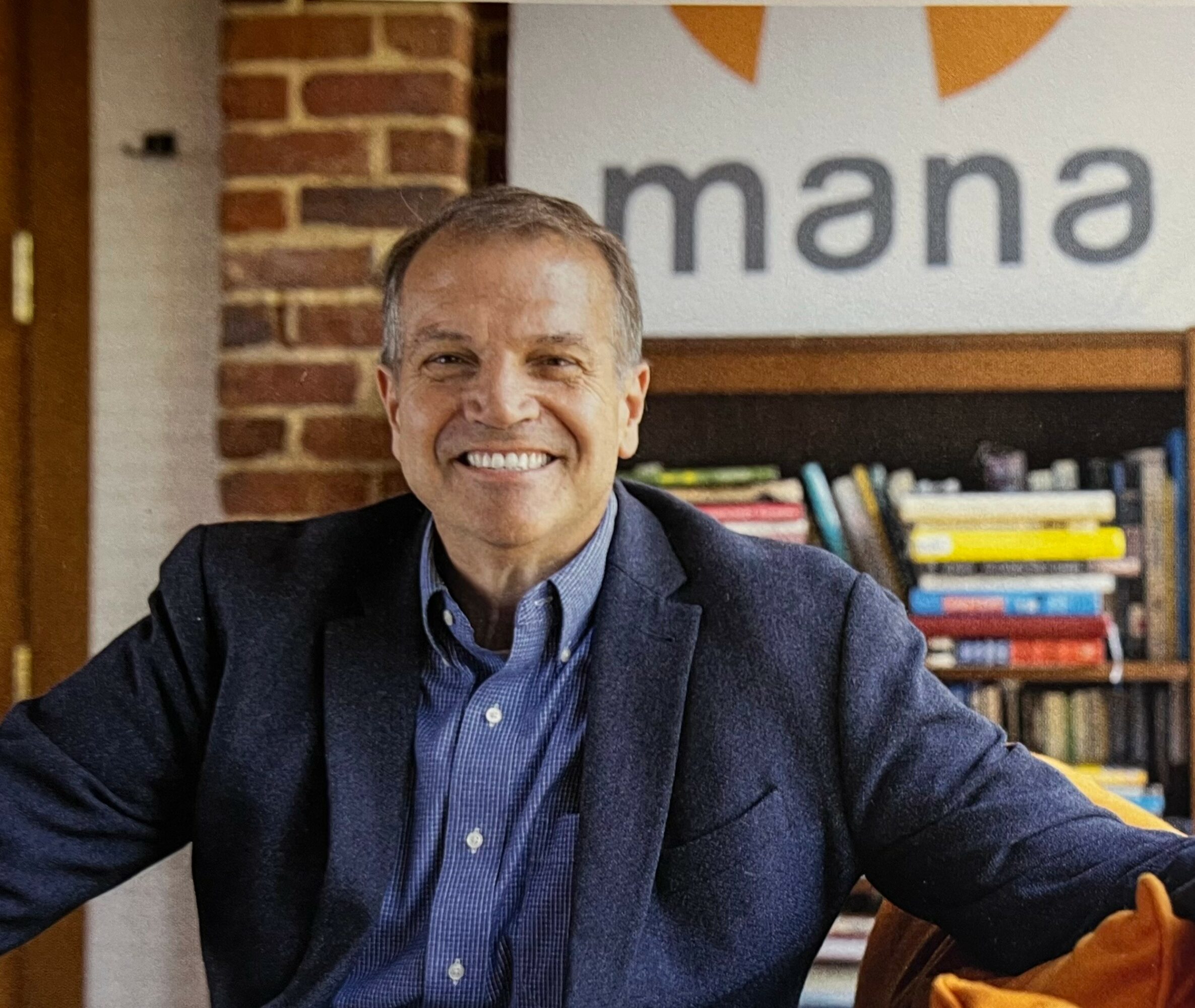
Today we’d like to introduce you to Mark Moore.
Hi Mark, thanks for sharing your story with us. To start, maybe you can tell our readers some of your backstory.
When I look back, Mana didn’t start as a business idea. It started as an idea to try and make a difference.
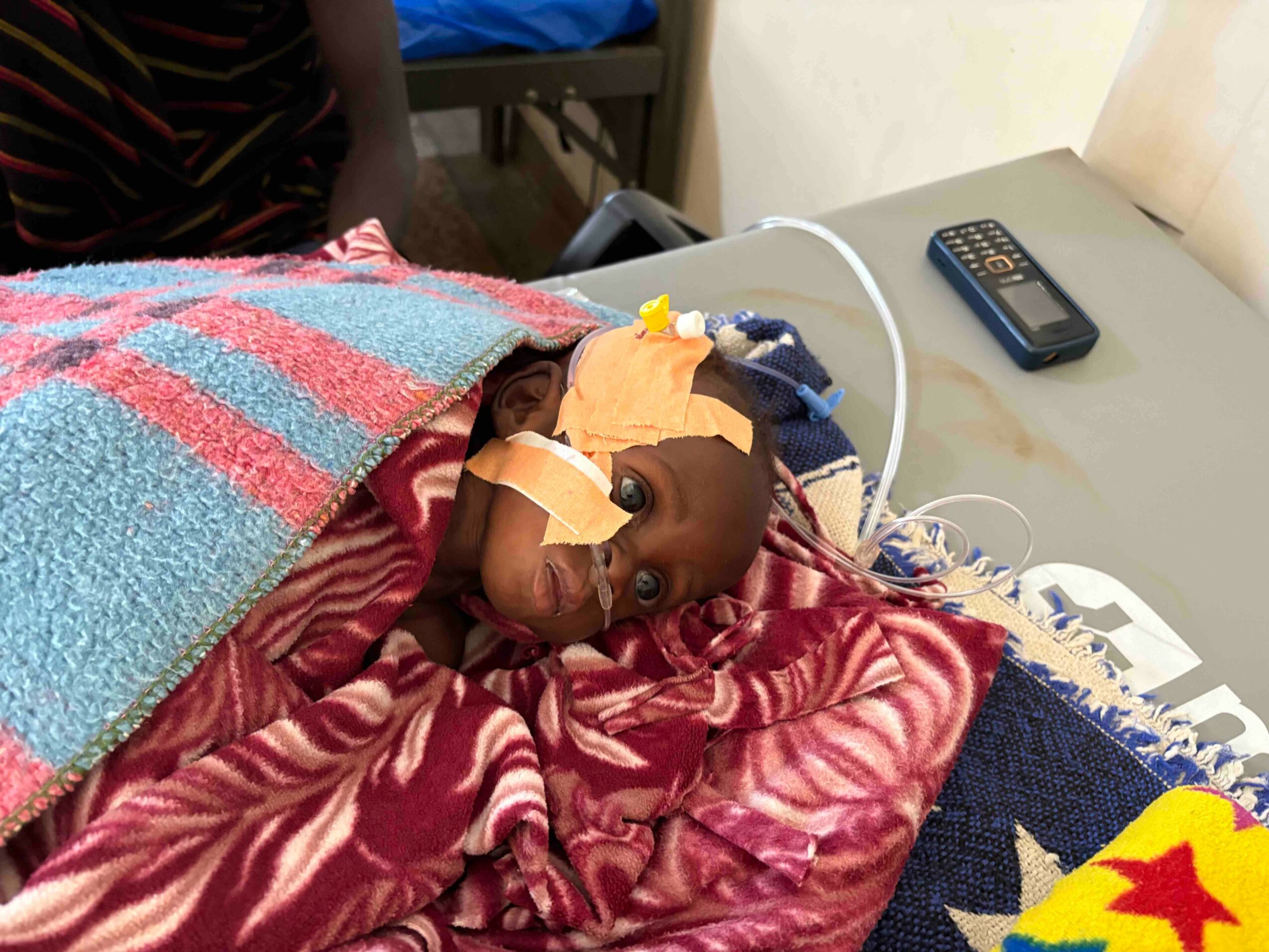
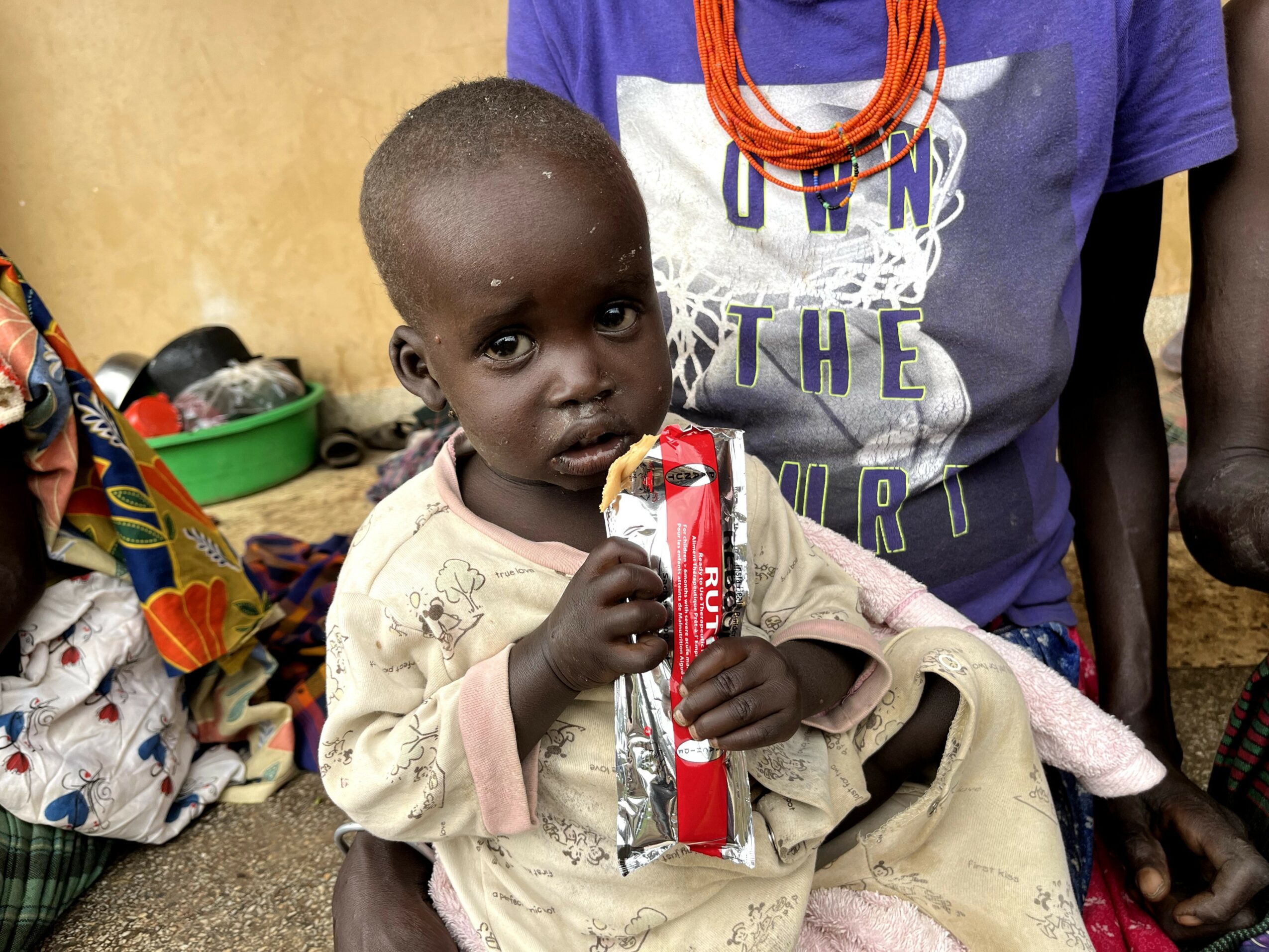
I lived in Uganda , East Africa for a decade. While thereI was exposed to the reality of severe acute malnutrition (SAM) — children dying not because we lacked knowledge, but because governments lacked resources, focus and determination to . When I returned to the USA for grad school and ended up working on Capitol Hill, I learned that the science to address SAM already existed. Ready-to-Use Therapeutic Food (RUTF) had proven it could save a child’s life in weeks. What was missing was scale, manufacturing capacity, and urgency.
I was challenged with a simple question: If this works, why aren’t we making it in the USA using our substantial food aid dollars?
So we started Mana Nutrition in Georgia with a very practical mission — build a high-quality, large-scale U.S. manufacturer of RUTF that could serve USAID and humanitarian partners with excellence, speed, and reliability. We weren’t trying to reinvent the product. We were trying to bring American manufacturing discipline, food safety rigor, and operational intensity to a global health problem. Most of all we wanted to tap into American funding for a wildly under-funded area of global health.
In the early years, we were scrappy. We were proving ourselves — to funders, to regulators, to partners. We built a tiny plant. We built a team. We built trust. Over time, that trust turned into long-term partnerships, and today Mana is one of the leading producers of RUTF in the world.
But what I’m most proud of isn’t scale — it’s impact. Millions of children have received life-saving treatment food produced by our team. That’s not abstract. That’s children who recover, families who stay whole, and communities that keep their future.
The journey hasn’t been linear. We’ve faced contract volatility, political shifts, funding uncertainty. We were hit hard by DOGE in 2025. We’ve had moments of real anxiety about survival, and moments of real gratitude watching Congress allocate unprecedented funding for RUTF. Through it all, what has sustained us is culture. We’ve worked hard to build an organization that believes competence is a form of compassion, that operational excellence is not separate from mission; it is the mission.
Today, the Mana village stands at a turning point. The need remains enormous. The funding landscape is evolving. But the core conviction that we started with remains unchanged: no child should die from a condition we know how to treat.
That’s the story. We saw something solvable. And we decided to build the capacity to solve it.
Alright, so let’s dig a little deeper into the story – has it been an easy path overall and if not, what were the challenges you’ve had to overcome?
Hahaha…. No, it hasn’t been a smooth road. But I’d be suspicious of any founder who said they had a smooth road.
From the beginning, we were building something unusual, a U.S.-based manufacturer focused on serving some of the poorest children in the world. That means our business model would be tied to government funding cycles, humanitarian crises, geopolitical shifts, and procurement decisions that are often… in fact, almost always, outside our control.
In the early years, the biggest struggle was credibility. We had to prove we could meet the highest food safety standards in the world. We had to convince partners that we could scale. We had to earn trust shipment by shipment.
But as Mana grew, the struggles changed. We’ve faced contract volatility where tens of millions of dollars could appear or disappear based on policy decisions. We’ve had moments where funding uncertainty created huge pressure, not just financially, but emotionally and psychologically for our village. It’s hard to run a manufacturing operation when demand is unpredictable and subject to political winds.
There have also been the ordinary struggles of any growing organization, hiring the right leaders, building culture intentionally instead of accidentally, making hard calls when something isn’t working.
One of the more defining seasons was last February when DOGE cut all contracts and funding. That was destabilizing. But it forced us to clarify who we are. We doubled down on culture, operational excellence, and long-term relationships. We pivoted and launched Good Spread, our domestic peanut butter company aimed at solving hunger problems right here at home via food banks. And now, in a pretty stunning turn, we’ve since seen historic levels of funding allocated to RUTF, something we could hardly have imagined in our early days.
What I’ve learned is this: the work itself is stable, children will always need treatment for malnutrition. The path to serving them is what fluctuates.
So no, it hasn’t been smooth. But the friction has shaped us. It’s made us more disciplined, more resilient, and clearer about why we exist.
As you know, we’re big fans of you and your work. For our readers who might not be as familiar what can you tell them about what you do?
As the leader of Mana, the peanut-based treatment we make brings children back from severe acute malnutrition. In very practical terms, what I do is help build and steward an organization that makes life-saving food at scale and delivers it reliably to humanitarian partners around the world.
What we specialize in is disciplined manufacturing in service of compassion. We operate in a space where quality cannot slip, where supply chains matter, where trust matters. We serve the US Government and the UN and global partners, and we focus on doing one thing extremely well: producing therapeutic food that meets the highest standards and reaches the children who need it most.
On paper, there are things that look like qualifications. I have a master’s degree from Georgetown, a doctorate from Vanderbilt, and I spent time as a Legislative Fellow in the U.S. Senate. Those are the resume virtues. They helped shape how I think about policy, systems, and institutions. They gave me access to rooms where decisions are made. Many leaders have them, mine are not particularly better or worse than most.
But they are not the things I hope anyone mentions at my funeral.
The deeper formation of my life happened earlier and elsewhere, growing up in Flint, Michigan, where I learned about grit and dignity; studying at Harding University, which most people haven’t heard of but which profoundly shaped my character; and especially wandering rural villages in Eastern Uganda for nearly a decade in my twenties and thirties. In those villages, malnutrition wasn’t a statistic. It had names and faces. It was mothers sitting on woven mats. It was clinics without enough supplies. It was children who could recover if someone simply showed up with the right food.
That experience certainly reordered my ambitions.
If there is anything I’m known for, I hope it’s this: trying to build institutions that are both competent and humane. I believe operational excellence is a form of love. I believe systems matter because people matter. I believe you can be serious about manufacturing metrics and still be tender about human suffering.
What sets Mana apart, and what I’m most proud of , is our culture. We’ve tried to build a team that understands that the work is not abstract. Every box we ship represents a child whose body can heal. Tens of millions of children have received treatment food produced by our team. That impact belongs to them, the operators, the quality teams, the logistics staff, more than it belongs to me. We call this the Mana Village… A community that just happen to be a company.
If there is any through-line in my story, it’s not credentials. It’s proximity. Proximity to suffering. Proximity to good mentors. Proximity to communities that shaped my understanding of service.
Resume virtues may open doors. But eulogy virtues, empathy, kindness, steadiness, faithfulness, service….are what sustain a life. Those are still the ones I’m trying to grow into.
What would you say have been one of the most important lessons you’ve learned?
Leadership is service.
Contact Info:
- Website: https://www.mananutrition.org
- Instagram: https://www.instagram.com/mananutrition/
- Facebook: https://www.facebook.com/ManaNutrition/
- Twitter: https://x.com/ManaNutrition
- Other: https://www.helpgoodspread.com