
Today we’d like to introduce you to Morgan Breitschuh
Hi Morgan, it’s an honor to have you on the platform. Thanks for taking the time to share your story with us – to start maybe you can share some of your backstory with our readers?
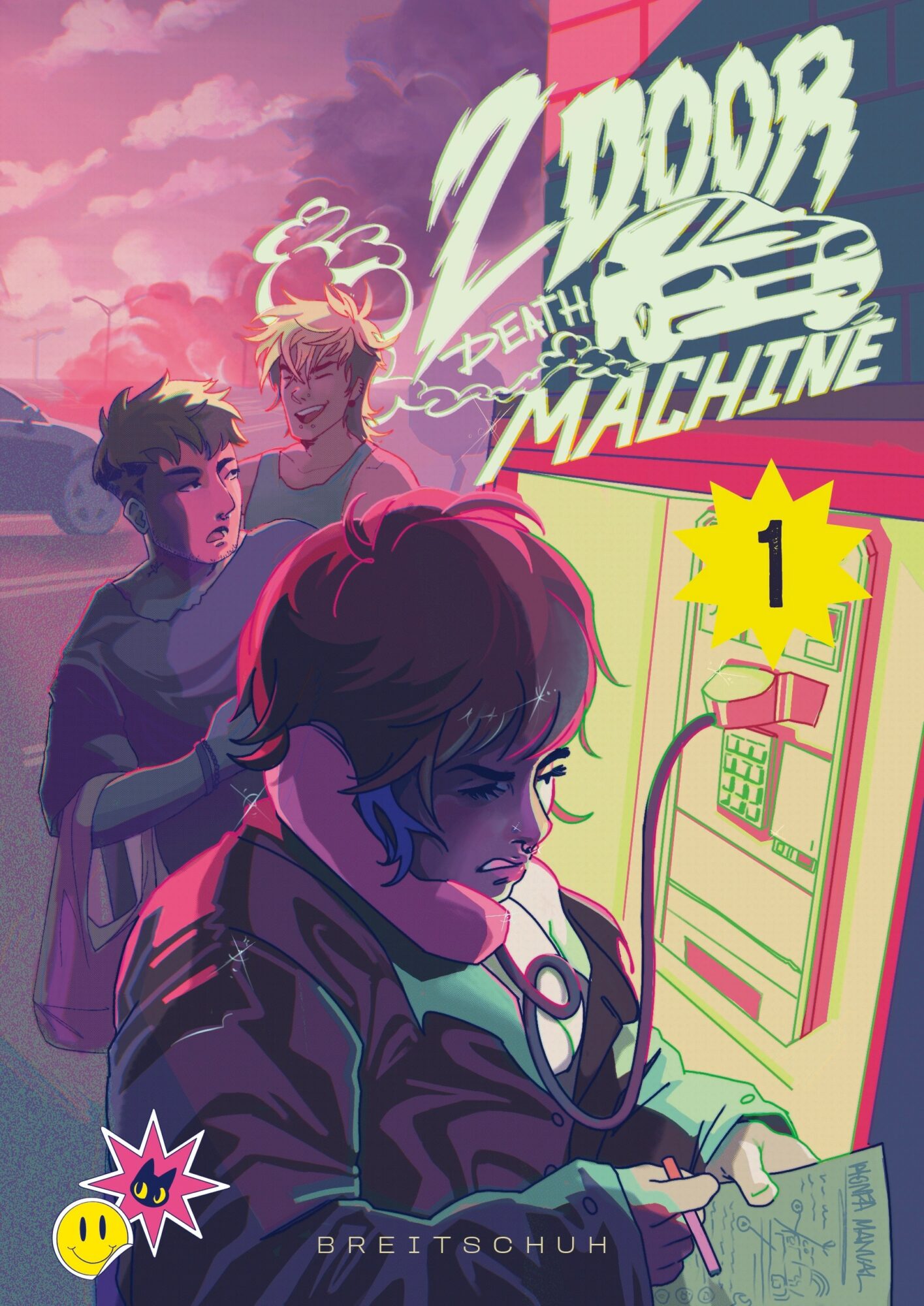
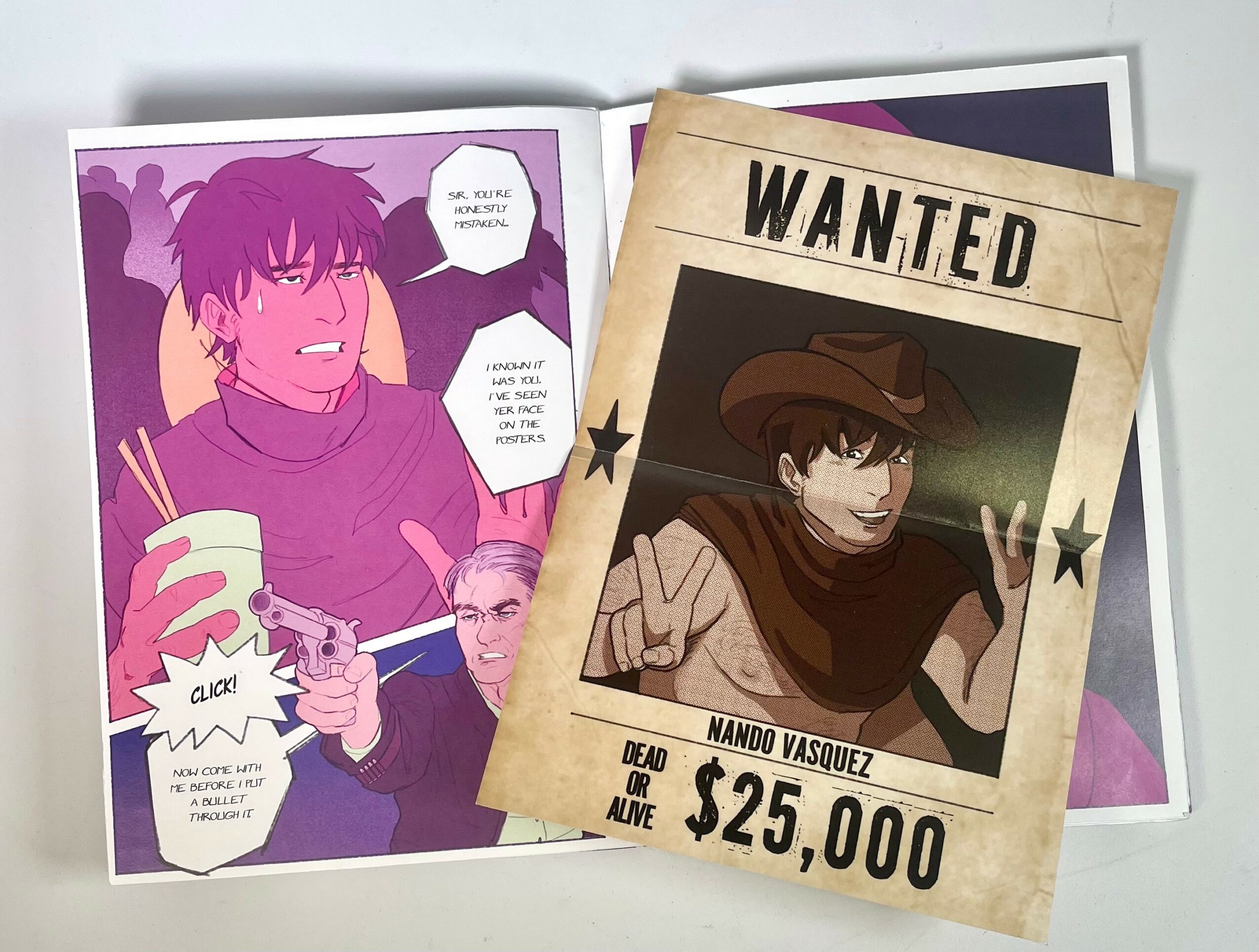
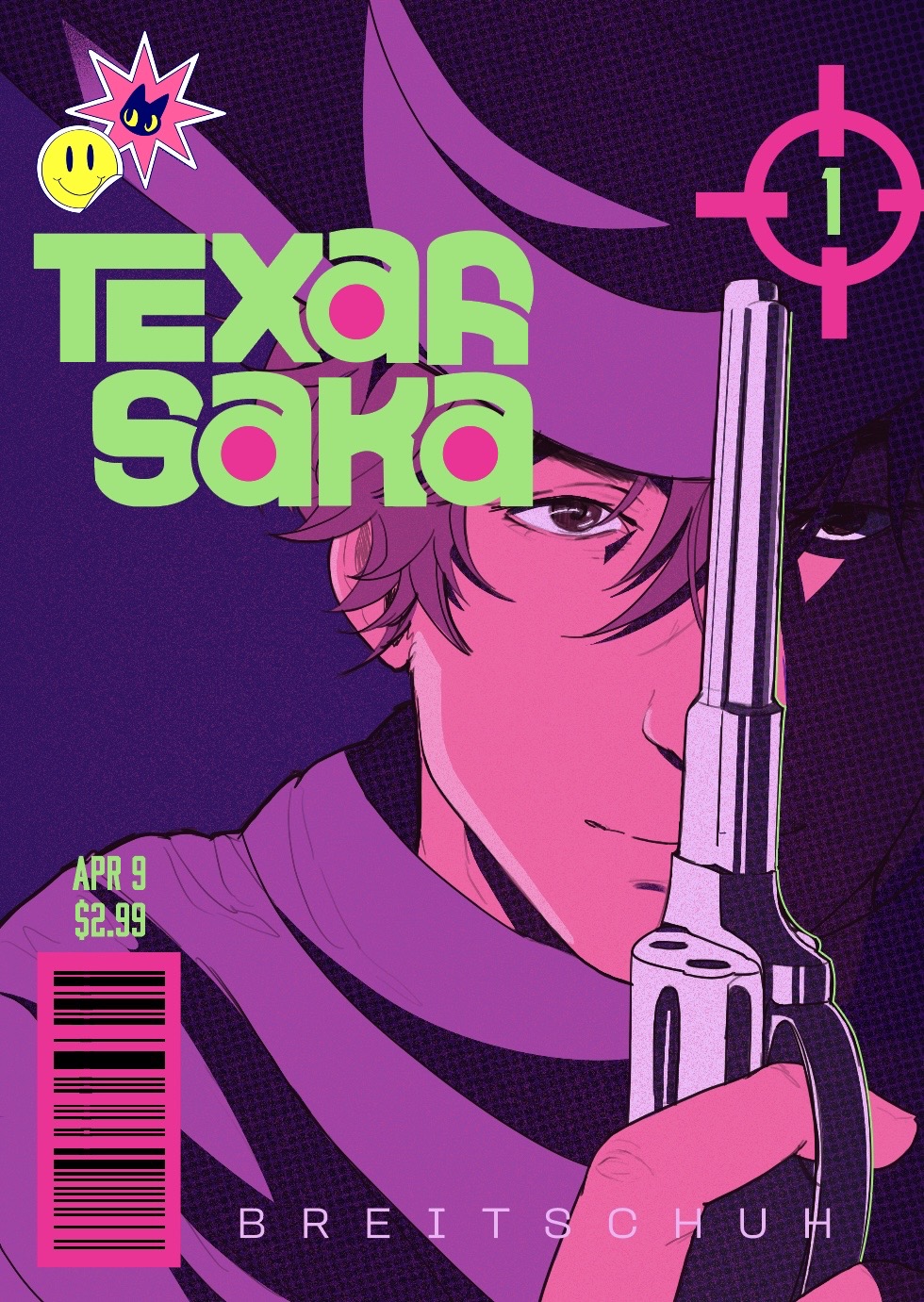
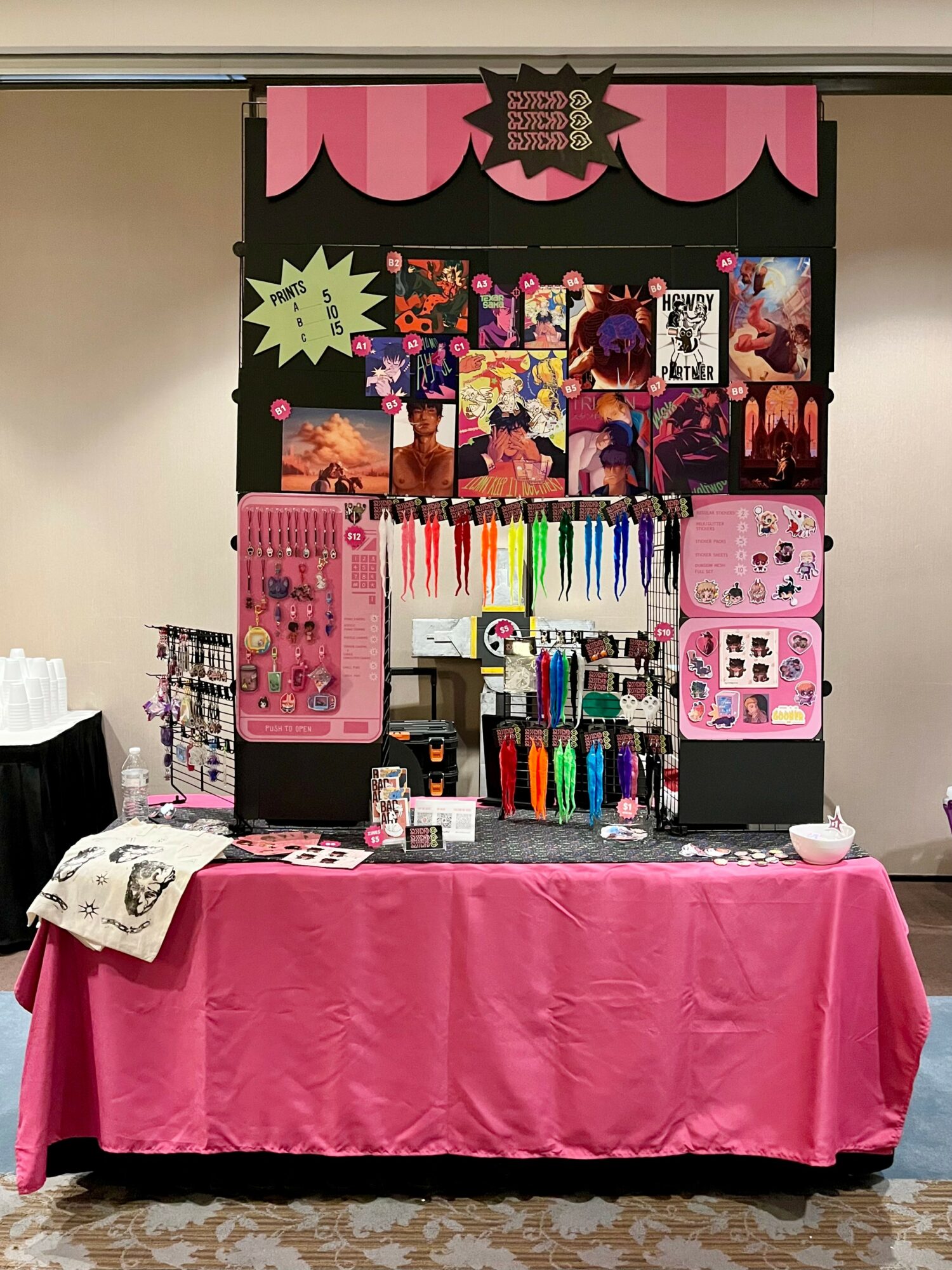
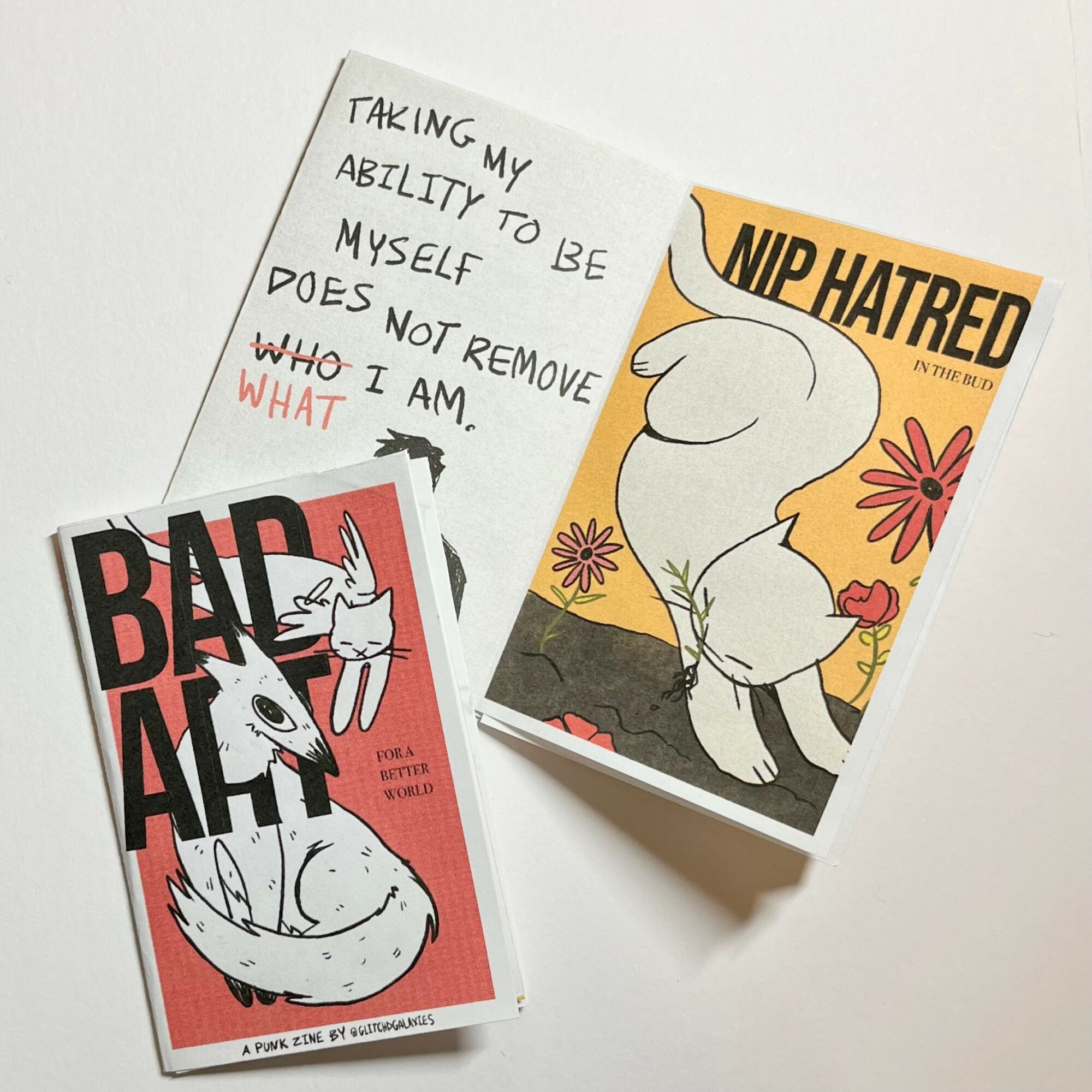
My creative side has always been innate, as I imagine every artist’s is. When I was little, I would look up step-by-step drawing tutorials and copy them over and over again. Watching Pokémon made me want to create my own stories and characters. I remember trying to design my own Pokémon. Since my work consists of human figures, I’m probably as adept at drawing animal-based creatures now as I was back then. Just like every other artist in Savannah, I went to SCAD to pursue my passion as a career. I learned a lot in my three years there, like I am not cut out for storyboarding, I deeply appreciate physical print production, and to never rely on public transport. In that time I was a contributor on roughly a dozen zines; indie art books compiling a collection of different artists’ works published under a uniting theme. Seeing my work in print was more rewarding than completing any project, and I found myself applying to every zine I came across, and designing my personal work with print in mind. Physical production is an addictive process, and I quickly found myself with enough product to sell my work at a local convention. The direction my work was taking me became evident from there, and now I table shows from Savannah to Chicago, directing my own zine and working in a print warehouse in between conventions.
We all face challenges, but looking back would you describe it as a relatively smooth road?
No matter how clear my vision is for my future, reality always manages to muddy it with its unpredictable nature. The first two conventions I was set to table this year were cancelled. Tariffs have gone up wildly, and merchandise manufacturers in the United States are limited. Things fall through and don’t go how you’d expect. These gripes may seem privileged to those who don’t see creative fields as necessary work. That in itself has been a big obstacle. People overlook the importance of art as a way to contextualize and communicate ideas in favor of something that’s more efficient. This is especially prevalent following the rise of generative AI, which significantly minimizes the time to reach a seemingly complete visual by cutting out the creative process, severing any semblance of context, human experience, informed decision, or intention from the final product. Creating art has always been about communicating an intention, and it has a powerful impact on the way people absorb information and form opinions on topics. To remove the intention from that process is rash and in certain situations, even dangerous. It broke my heart to see how pro-AI much of the graphic design department was at SCAD. Art is a collaborative field, and as a convention and zine artist I have seen just how much artists rely upon one another to sustain the industry as a whole. To watch my fellow designers look for ways to cut other creators out of their processes as if they were a problem rather than a part of the creative cycle was a harsh reminder of how people view art as business first and a community second. Keeping that balance is something I am always working to perfect.
Alright, so let’s switch gears a bit and talk business. What should we know about your work?
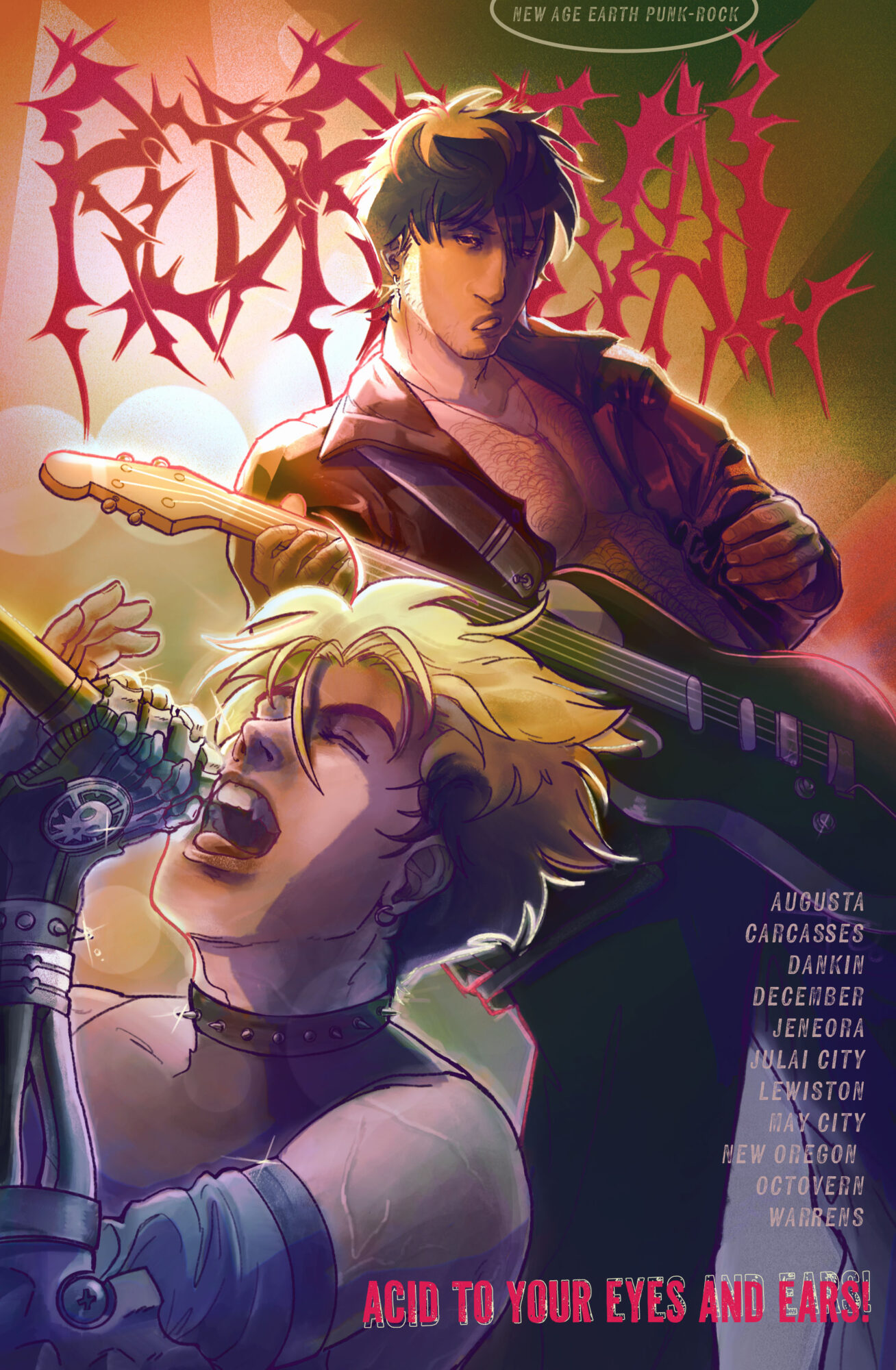
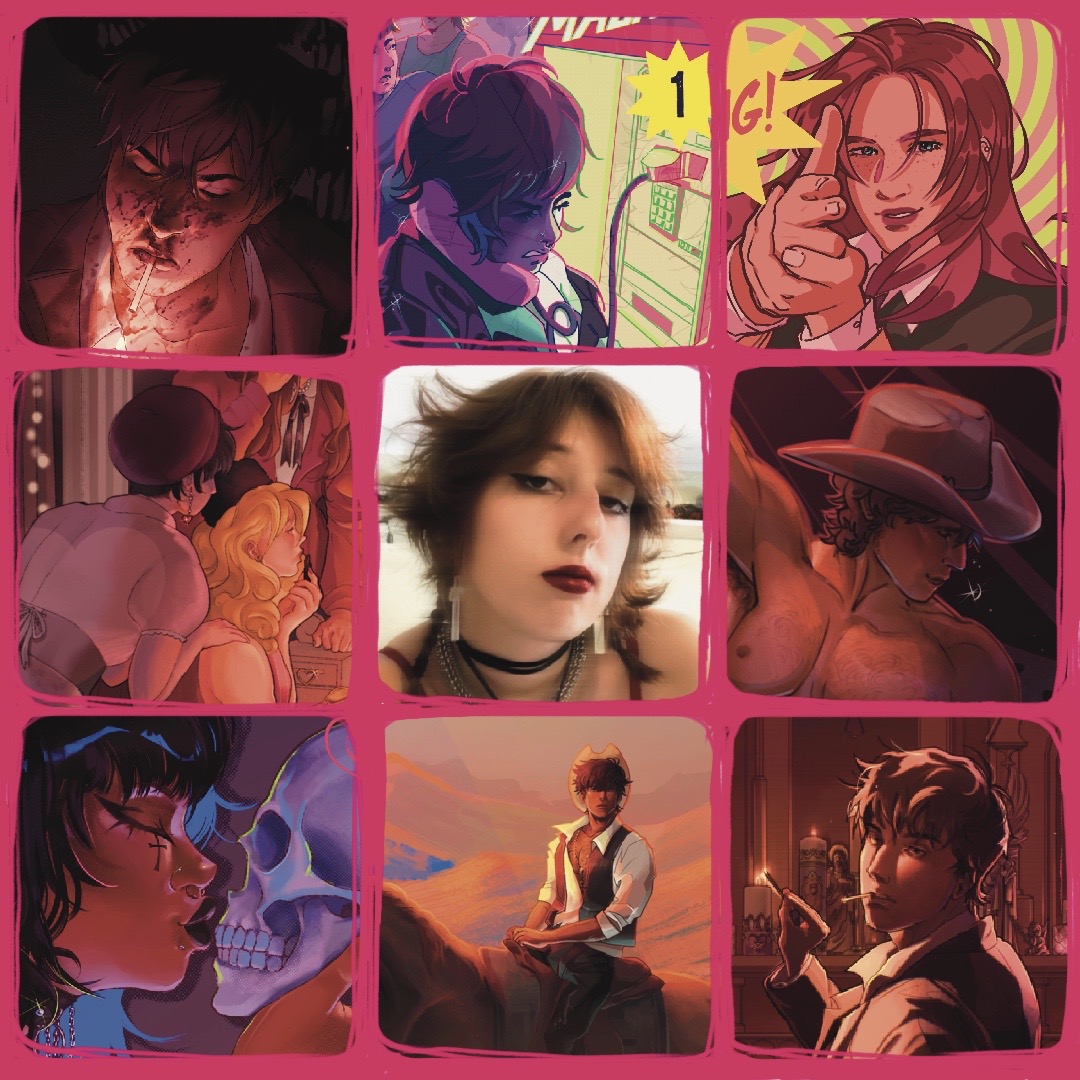
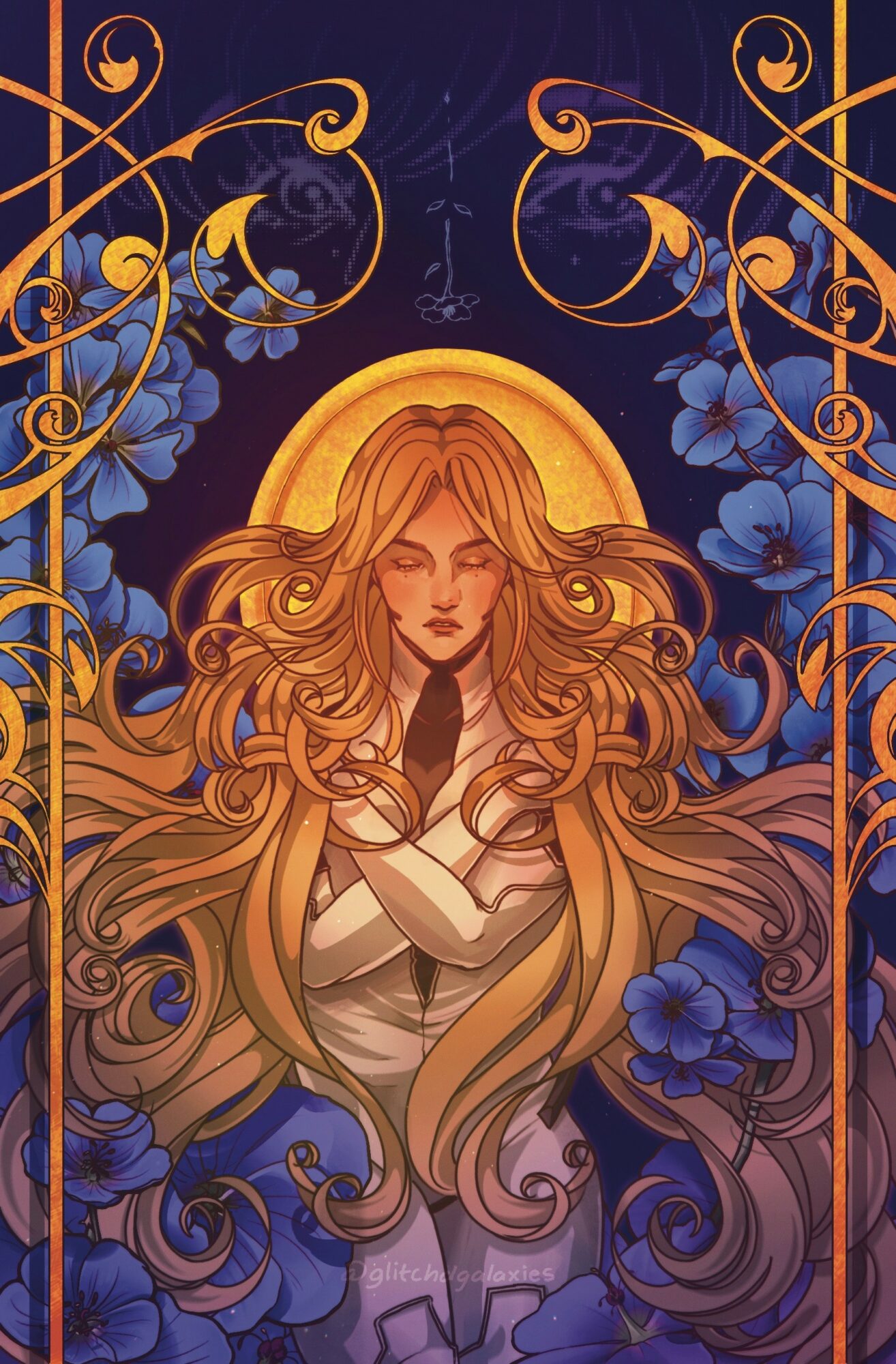
Being cross-disciplined in graphic design and illustration, I like to pull textual and graphic elements into my illustration work, and vice versa. I pride myself in frankensteining compositions together through my application of text, visual styles, forced perspective and textures. I like to push how much I can make elements clash until they come back together. Some of my pieces might have halftones over art nouveau structures. Others will have fully rendered figures overlapped with 2D shapes. I never limit myself as long as I’m having fun, and my stylization of figures and use of color keeps the body of work distinctly mine. I think I’m most proud of my character Nando, who is the perfect visual representation of the center of my inspiration venn diagram. I have plans for him and his story in the future, but presently I’m definitely most known for my TRIGUN fan works. I have art from the original manga tattooed on me, so it would be sacrilege to not try my own hand at drawing the characters. I’m happy that my interpretations of them resonate with anyone at all.
We’re always looking for the lessons that can be learned in any situation, including tragic ones like the Covid-19 crisis. Are there any lessons you’ve learned that you can share?
Covid-19 showed me the extreme lengths people will go to in order to preserve their comfort at the expense of others’ wellbeing. As a teen just breaching the world of more nuanced, adult conversations and reaching the age to vote, it was a radicalizing experience. We’re watching the same trend followed with the regression of healthcare for women and trans individuals. I think these events radicalized my art as well. As a queer woman, even if the subject of my work isn’t inherently political, it’s bold and unapologetic.
Contact Info:
- Website: https://www.glitchdgalaxies.com/
- Instagram: @glitchdgalaxies
- LinkedIn: @glitchdgalaxies
- Twitter: @glitchdgalaxies
- Other: @loveandlassos everywhere – my zine!