





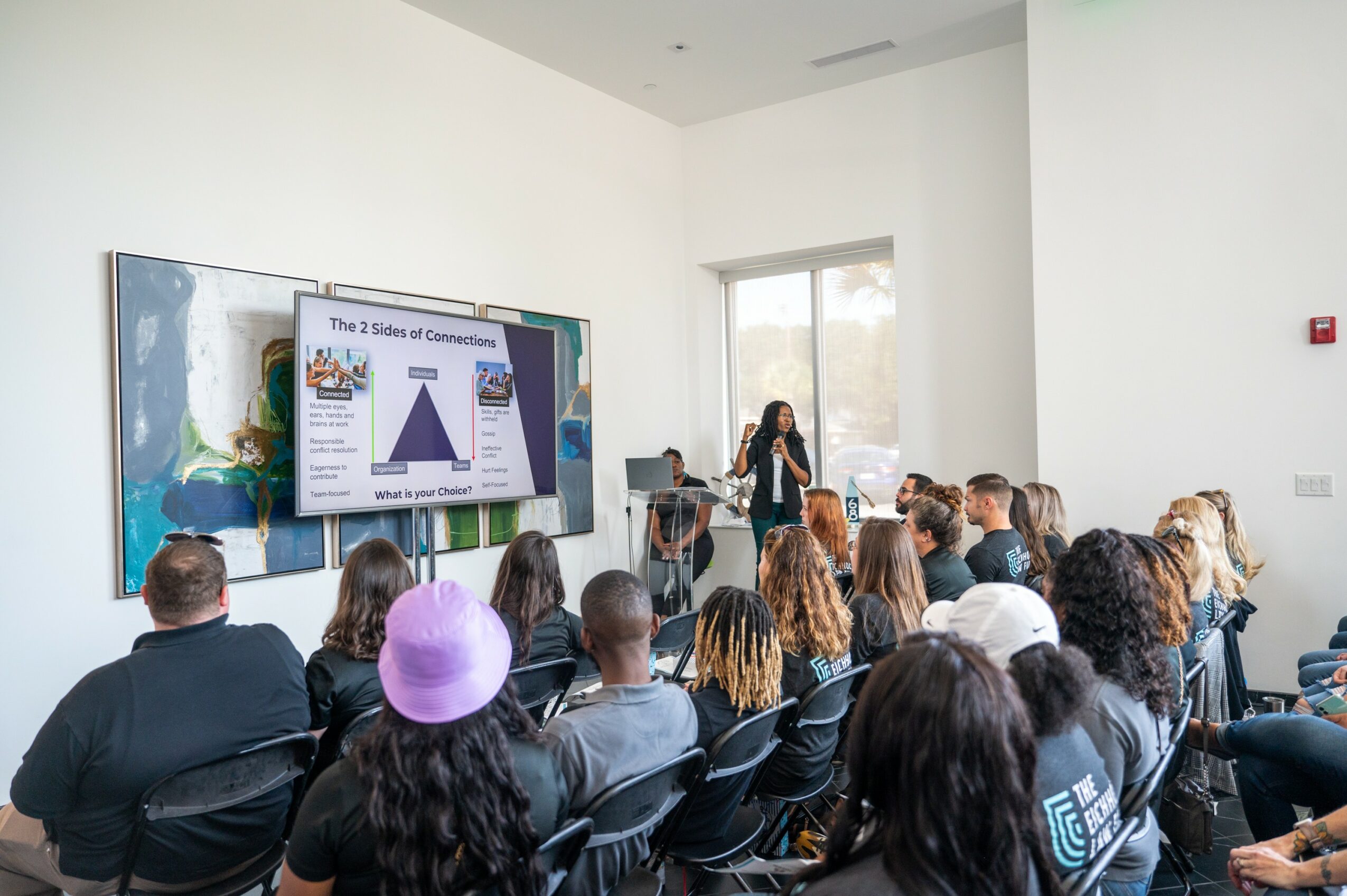
Today we’d like to introduce you to Victoria Baylor.
Alright, so thank you so much for sharing your story and insight with our readers. To kick things off, can you tell us a bit about how you got started?
Hello, I’m Victoria Baylor, and I’m grateful for the opportunity to share a bit of my story.
My work was born from lived experience. Over fifteen years ago, I was a leader who looked confident on the outside and quietly overwhelmed on the inside.
I understood strategy. I worked hard. I cared deeply about the peopleand the work I did. But I was carrying pressure I didn’t have language for. I eventually shared part of that journey in my 2019 TEDx Talk, but what changed my life wasn’t the stage—it was the realization that leadership strain is often invisible, and leaders rarely feel safe admitting when they’re struggling.
As I was able to claw my way out of my situation, this realization became the drive for my work. What happens when the person leading everyone else becomes misaligned within themselves? Out of that question, my purpose was born.
Today, through my firm, I help leaders navigate the internal and external pressures of their roles. I call it Leadership Recovery—the process of helping leaders reconnect with their identity, realign their mindset, and lead with clarity and steadiness again.
I’m especially passionate about normalizing the conversations leaders tend to hide: the doubt, the exhaustion, the quiet loss of confidence that can happen under constant demand. When those realities are acknowledged instead of avoided, something powerful happens. Leaders don’t weaken—they stabilize. They grow.
My background in research science shaped how I approach this work. I value data, patterns, and evidence. But I also value humanity. I believe leadership sits at the intersection of performance and well-being. When both are nurtured, the ripple effect touches teams, organizations, and communities.
It’s an honor to walk alongside leaders as they rediscover their footing. I often say I get to “polish diamonds” every day—and I truly mean it.
Can you talk to us a bit about the challenges and lessons you’ve learned along the way. Looking back would you say it’s been easy or smooth in retrospect?
One of the biggest challenges I’ve faced is building something that didn’t have a clear category. “Leadership Recovery” isn’t a common phrase. When you create language before the market fully recognizes it, you have to be willing to explain it over and over again before people truly understand its value.
There were also seasons of self-doubt—wondering if I was being too bold by addressing the emotional and identity side of leadership when many organizations only want performance metrics. But I’ve learned that courage is part of leadership, too. Staying committed to the deeper work, even when it would be easier to water it down, has been both the challenge and the growth.
We’ve been impressed with Victoria Baylor Leadership & OD Solutions, but for folks who might not be as familiar, what can you share with them about what you do and what sets you apart from others?
When people first hear the phrase Leadership Recovery, they pause. And that’s intentional.
Most organizations try to fix leadership challenges the way you’d patch a crack in drywall—quick repair, smooth it over, move on. But what I’ve learned, both as a former research science associate and now as a Leadership Recovery Coach, is that many leadership issues aren’t surface cracks. They’re structural strain. My work exists to address that strain.
Through my firm, Victoria Baylor Leadership & OD Solutions, I help leaders and organizations navigate pressure and change with clarity, connection, and sustainable growth. I specialize in what I call Leadership Recovery—the process of helping leaders realign internally so they can lead externally with integrity, stability, and strength.
I work at the intersection of systems and humancentric leadership.
On one side, I bring scientific rigor—including data analysis and evidence-based assessment tools. On the other side, I bring deep human insight—helping leaders understand their identity, strengths, stress patterns, communication habits, and the unconscious pressures shaping their decisions.
Because here’s what I’ve seen over and over again: You can’t build high-performing leaders or teams on misaligned leadership foundations.
I’m known for helping organizations NOTICE blind spots, RESET misalignment, and CHOOSE healthier patterns that actually last. Whether it’s delegation bottlenecks, decision fatigue, team overreliance on one leader, or cultural tension during change, I help leaders move from reactive pressure management to intentional design.
What sets me apart is that I don’t just teach leadership theory—I diagnose root causes. I don’t chase symptoms. I strengthen structures.
My proprietary frameworks, including the Leadership Recovery Blueprint™ and the 5R Leader Reset™, guide leaders through a process of realignment, repair, and sustainable growth. It’s worth noting that Leadership Recovery is at the intersection of leadership development and leadership well-being.
Brand-wise, what I’m most proud of is that Leadership Recovery gives language to something leaders have felt but couldn’t name. It creates safety without lowering standards. It addresses performance without ignoring humanity. It honors both results and relationships.
I want readers to know this:
If you’re carrying pressure, you don’t talk about…
If your organization feels productive but misaligned…
If you’re succeeding externally but quietly exhausted internally…
There is another way to lead. My work isn’t about becoming someone else. It’s about returning to alignment—so your leadership can hold the weight it was meant to carry. And when leaders recover, organizations don’t just perform better.
They become healthier, steadier, and far more sustainable.
Are there any important lessons you’ve learned that you can share with us?
I’ve learned that you cannot build something sustainable from fear. You have to follow your God-given path with faith and boldness and believe deeply in the impact you’re called to make.
I learned that when your work and strengths will always speak for itself. I encourage my clients to accept it. I realized that when you truly understand the transformation you provide, you don’t rush it—and you don’t apologize for it.
Lastly, I’ve also learned that leadership is never just about strategy. It’s about alignment. When a leader is clear internally, decisions become cleaner, teams become steadier, and growth becomes healthier. That lesson continues to guide both my clients and me.
Contact Info:
- Website: https://www.victoriabaylor.com
- Instagram: https://www.instagram.com/victoriabaylor/
- Facebook: https://www.facebook.com/VictoriaBaylorpage/
- LinkedIn: https://www.linkedin.com/in/victoriabaylor/